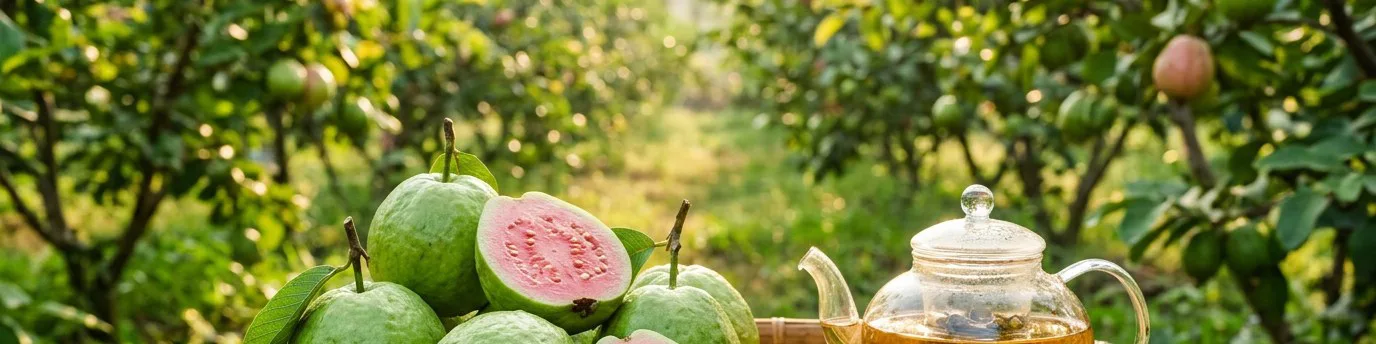
Crisp slices of fresh guava appear on family fruit platters across Vietnam nearly every day, yet surprisingly few fruit lovers pause to consider where this resilient evergreen first evolved or when it entered Asian agriculture. Tracing the botanical origins of guava takes us across the Pacific to the warm Neotropical lowlands of southern Mexico and Central America. Classified by botanists as Psidium guajava within the Myrtaceae or myrtle family, the species thrived naturally in frost-free Mesoamerican valleys before early maritime routes carried its hardy, long-lived seeds across tropical South America, the West Indies, and eventually throughout Southeast Asia and the Pacific islands.
Global Adaptation and Distinctive Floral Morphology
Wherever warm sunshine and reliable seasonal rainfall meet, Psidium guajava adapts with remarkable vigor across both tropical and frost-free subtropical zones. Across islands such as Hawaii, naturalized guava shrubs and small trees spring up effortlessly beside country roads, coastal trails, and volcanic hillsides. In India, centuries of cultivation elevated guava into a major commercial orchard crop planted extensively across the subcontinent. In Vietnam, generous monsoon rainfall, warm humidity, and fertile alluvial river deltas proved equally hospitable, allowing farmers from northern provinces to the Mekong Delta to cultivate guava year-round as a dependable, high-value perennial fruit crop. Readers curious about regional cultivar diversity can explore our guava varieties and botany collection for detailed orchard profiles.
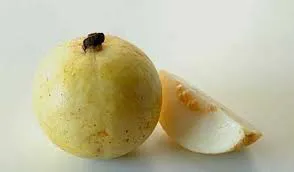
In the orchard, guava trees announce each new fruiting cycle with pure white, bisexual blossoms crowned by delicate tufts of pale-yellow stamens, emerging either singly or in graceful clusters of two to three flowers along young leafy shoots. Depending on the cultivar, developing fruits assume round, ovoid, or classic pear-shaped silhouettes, ranging from petite heirloom varieties to hefty table fruits. As guava ripens on the branch, its outer skin shifts from deep emerald to pale chartreuse or soft yellow, enclosing interior flesh that varies by breed from snowy white and buttery yellow to blush pink, coral salmon, or vibrant ruby red. Inside the central cavity, lightly seeded varieties hold only a small cluster of seeds at the core, whereas traditional cultivars distribute firm edible seeds throughout the juicy inner pulp. Unripe green fruit carries a brisk, tannic bite and higher natural acidity; nearly ripe fruit delivers the cooling, crisp crunch prized across Vietnamese households; and fully tree-ripened guava balances sweet and tart notes with an unmistakable tropical perfume that never blends indistinctly into other fruits.
Aroma Chemistry and Tropical Superfruit Nutrition
Celebrated around the world as the apple of the tropics, fresh guava serves as a wholesome everyday dessert alternative that easily rivals temperate orchard staples, earning its reputation as a natural nutritional powerhouse for daily family meals. Each crisp serving supplies abundant vitamin C, B-complex vitamins, and provitamin A flavonoids—including beta-carotene, lycopene, lutein, and cryptoxanthin—that nourish digestive comfort, respiratory resilience, and cellular antioxidant protection. Gram for gram, fresh guava delivers roughly four times as much vitamin C as ripe tomatoes, and laboratory comparisons confirm that ripe guava packs far more vitamin C than oranges while offering satisfying dietary fiber frequently highlighted in practical guava weight-balance routines.
Food technologists also prize soft-fleshed, juicy processing cultivars for their high commercial value and aromatic intensity in nectars and purees, even when their rustic exterior looks less showy than glossy table varieties. Phytochemical aroma analyses reveal that pale-fleshed guavas owe much of their delicate fruity bouquet to low-molecular-weight volatile compounds—chiefly esters, aromatic alcohols, and aldehydes—whereas richly pigmented fresh cultivars abound in terpene hydrocarbons. Across every variety, carbonyl compounds generate the bold, lingering tropical scent that fills a kitchen the moment ripe guavas are sliced.
Botanical Leaf Extracts, Export Value, and Fine Perfumery
Beyond culinary enjoyment, green guava leaves have long been steeped as traditional astringent infusions for digestive comfort. In microbiological laboratory studies, methanolic extracts prepared from guava leaves have demonstrated notable inhibitory activity against common foodborne and environmental bacteria such as Salmonella, Shigella species, and Escherichia coli, complementing traditional topical cleansing practices documented by ethnobotanical researchers for keeping minor skin abrasions clean and comfortable.
On the global agricultural market, tropical nations export both fresh table guavas and value-added cold-pressed juices, nectars, jams, jellies, fruit pastes, candies, and artisanal syrups to temperate regions worldwide. Contemporary perfumers likewise treasure guava's sparkling exotic note in fine fragrances and colognes—including Pacifica's unisex Hawaiian Ruby Guava layered over warm musk as a vibrant middle heart note, lush Noir Summer floral-fruity blends marrying tropical guava with rose petals, jasmine, and Mediterranean musk, and Fruits and Passion's Grapefruit-Guava eau de toilette for women, where crisp guava shines right from the opening top notes.