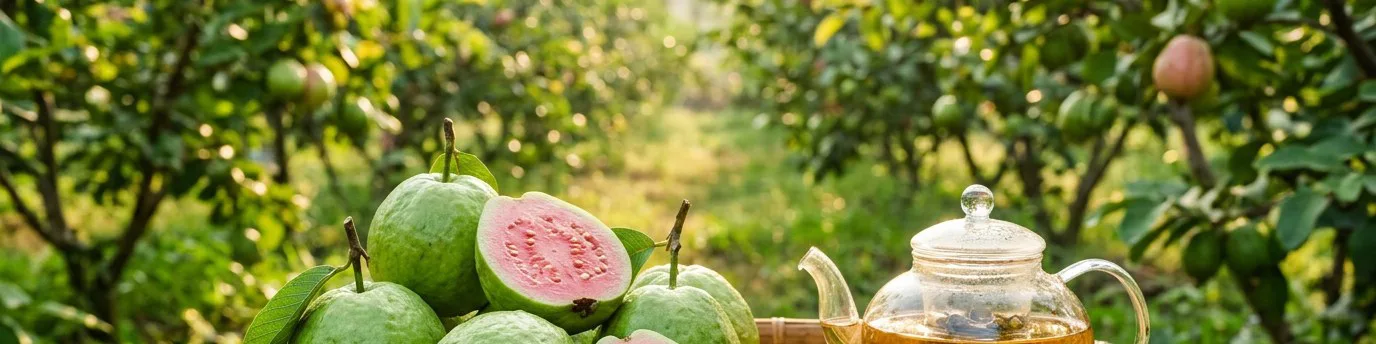
Across Vietnam, the humble guava tree (Psidium guajava) has long been a staple of family courtyards, prized for its crisp, fragrant harvest. In recent decades, growing appreciation for tropical fruit wellness has inspired farmers to expand from backyard trees into intensive commercial orchards. Beyond the refreshing fruit itself, traditional Eastern herbalism places high value on guava stems and leaves, tender leaf buds, root bark, and fruit rind as versatile household botanicals for everyday digestive comfort.
Traditional Botanical Qualities of the Guava Tree
In classical Eastern herbal literature, guava leaves carry a mildly bitter, astringent taste and a warming nature. Herbal practitioners value these tannin-rich leaves for soothing tissue irritation, calming localized swelling, and offering gentle astringent support. Meanwhile, ripe fresh tropical guava fruit nutrition delivers a sweet, lightly tangy flavor with warming, stomach-toning qualities that support resilient bowel function. Because almost every part of the tree concentrates polyphenols, flavonoids, and natural tannins, traditional Vietnamese households prepare targeted decoctions from buds, leaves, stem bark, and dried fruit slices to ease occasional loose stools, calm unsettled stomachs, and support balanced daily wellness.
Time-Honored Herbal Preparations for Digestive Comfort
Traditional Vietnamese folk herbalism adapts guava preparations according to whether digestive discomfort stems from seasonal chills, summer heat, or sluggish digestive vitality. Below are classic household formulations preserved in local herbal guides:
- Concentrated Bud and Peel Decoction for Loose Stools: Combine 20 g of tender young guava buds (or unripe guava fruit peel), 12 g of voi leaf buds (Cleistocalyx operculatus), 12 g of rose myrtle buds (Rhodomyrtus tomentosa), 12 g of green tea leaves, 12 g of sliced fresh ginger, 20 g of dried banana blossom tip, and 12 g of aged areca seed, then simmer slowly into a rich herbal brew. An alternative gentle formula simmers 12 g of young guava buds, 8 g of guava peel, 2 g of fresh ginger, and 8 g of sappanwood (Caesalpinia sappan) in 200 ml of water until reduced to 100 ml; in traditional household practice, adults sip 20 to 30 ml two or three times daily, while young children aged two to five were historically given 5 to 10 ml every two hours under attentive adult supervision.
- Warming Infusion for Cold-Induced Digestive Upset: Dry-roast 12 g of young guava leaf buds until aromatic and pair them with 8 g of flame-charred fresh ginger with peel intact. Simmer both ingredients in 500 ml of water until concentrated to 200 ml, dividing the warm liquid into two servings per day. Another warming herbal option brews 15 g of young guava buds with 15 g of patchouli herb (Pogostemon cablin) and 18 g of aged tangerine peel.
- Golden-Roasted Powder and Tea for Summer-Heat Discomfort: Lightly pan-roast until golden 20 g of guava stem bark, 15 g of fresh tea leaves, and 10 g of kudzu root tubers, then combine with 10 g of rose myrtle buds and 10 g of aged tangerine peel. Grind the dried botanicals into a fine powder; traditional adult servings measure 10 g with warm water, or half that amount for older children. Alternatively, simmer 20 g each of golden-roasted guava rind, astringent streblus bark, roasted tangerine peel, and roasted plantain flower spikes (Plantago major) to sip warm.
- Soothing Brew for Sluggish Digestive Vitality: Simmer 20 g of small young guava leaves or buds with 10 g of flame-roasted fresh ginger and 40 g of dried mugwort in three cups of water until reduced to one cup, sipping small warm portions throughout the day.
Stomach Soothing and Intestinal Balance Infusions
For recurring stomach sensitivity and unsettled bowels, traditional preparers dry tender young guava leaves and mill them into a fine green botanical powder, steeping 6 g in warm water twice daily. A rustic kitchen variation crushes one handful of washed fresh guava leaves with 6 to 9 g of fresh ginger and a pinch of sea salt, dry-roasts the mixture in a pan until fragrant, and simmers it into a comforting tea. Herbalists also brew 9 to 15 g each of guava leaves, burnet root (Sanguisorba officinalis), and Spanish needles herb (Bidens pilosa) as a balanced infusion.
When persistent intestinal irritation calls for stronger astringent plant tannins, traditional recipes simmer 2 to 3 thinly sliced dried guava fruits in water, or steep 30 to 60 g of fresh mature leaves. Another classic decoction combines 30 g of guava leaves, 30 g of brake fern herb (Pteris multifida), and 3 g of sweet licorice root in 1,000 ml of water, simmering down to 500 ml to be taken in 50 ml portions twice a day.
Glycemic Support, Oral Rinses, and Topical Folk Care
Beyond digestive teas, Vietnamese botanical traditions incorporate the fruit and foliage into broader daily self-care routines—much like readers exploring prenatal nutrition benefits of fresh guava or healthy weight management with high-fiber guava as part of a balanced diet:
- Daily Glycemic Balance Beverages: Wash and slice 250 g of crisp fresh guava, press the slices into natural juice, and divide into two refreshing daily servings, or simmer 15 to 30 g of dried guava leaves as an unsweetened daily tea alongside balanced meals.
- Warm Botanical Mouth Rinse for Gum Comfort: Simmer clean guava root bark with natural sour rice vinegar, allow it to cool to a comfortable warmth, and swish gently several times a day before spitting out to refresh sensitive gums.
- Topical Leaf Poultices for Blemishes: In rural folk skincare, equal parts thoroughly washed young guava leaves and fresh peach leaves were crushed into a clean paste and applied briefly to newly formed surface blemishes, while freshly washed crushed leaves were traditionally used to soothe minor skin scrapes—though modern hygiene always recommends proper antiseptic cleansing and professional medical advice for open wounds or persistent symptoms.
Important Dietary Note: Because unripe guava fruit, bark, and concentrated leaf buds are rich in astringent tannins, individuals experiencing constipation, abdominal bloating, sluggish indigestion, or acute systemic illness with dehydration should avoid eating green guava or drinking concentrated guava bark and leaf decoctions.
When prepared thoughtfully with clean ingredients and sensible portions, traditional guava infusions connect modern households to generations of Vietnamese botanical wisdom. Browse our guava nutrition and herbal leaf care archive for more seasonal wellness guides and kitchen preparations.