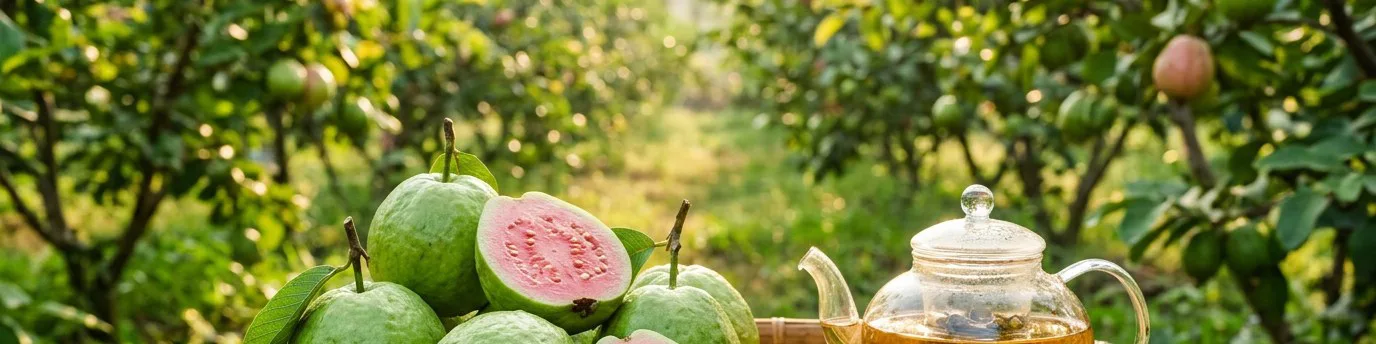
Across southern fruit-growing provinces such as An Giang and Ninh Thuan, seedless Xa Li guava has long proven its commercial strength, achieving impressive orchard yields of 20 to 60 tons per hectare annually once trees reach three to four years of age. Encouraged by that high productivity, northern Vietnamese growers gradually introduced the cultivar into former Ha Tay, Bac Ninh, and Quang Ninh before launching structured field evaluations in Hai Duong province, building upon Vietnam's broader seedless guava cultivation progress.
Botanical Traits, Edible Flesh Ratio, and Farm-Gate Value
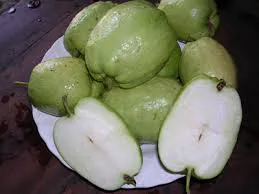
While seedless Xa Li guava shares the hardy branching habit of related cultivars, technicians distinguish its foliage by oval leaves measuring 5 to 7 centimeters wide and 8 to 12 centimeters long whose margins curl slightly upward compared with standard seeded varieties. Mature fruits display an elongated pear-like silhouette, bright green skin, and dense, creamy-white flesh prized for its lively crunch, refreshing sweet-tart balance, and rich vitamin C content, complementing antioxidant research showing how vitamin-rich fresh guava helps neutralize dietary nitrites.
Each harvested fruit averages 350 to 400 grams with a solid, seed-free core that achieves an exceptional 98% edible flesh utilization rate. Seedless Xa Li seedlings establish rapidly in fertile alluvial soil, capable of setting initial blossoms just six months after planting and flowering staggered crops continuously throughout the year when managed with timely shoot pruning and balanced fertilization. Fruits reach harvest maturity approximately 120 days after bloom. In local wholesale markets, seedless Xa Li harvests command farm-gate prices of 15,000 to 20,000 VND per kilogram—roughly double the 8,000 to 10,000 VND per kilogram paid for conventional seeded guavas harvested during the same season.
Hai Duong Orchard Landscape and 2011 Extension Training
Orchard farming in Hai Duong expanded briskly over the preceding five years, turning guava into a favored cash crop for smallholder households and commercial farms alike. By 2010, provincial guava acreage reached roughly 800 hectares, anchored by Thanh Ha district with nearly 500 hectares and supported by 20- to 35-hectare production zones across Chi Linh, Ninh Giang, Nam Sach, and Kinh Mon. Alongside traditional grease guava and heirloom Bo guava, local farmers adopted newer releases such as White Guava No. 1 bred by the Fruit and Vegetable Research Institute and crisp Taiwanese pear guava.
In 2011, the Hai Duong Center for Application of Scientific and Technological Advances partnered with the Fruit and Vegetable Research Institute to conduct two hands-on training sessions for farmers and agricultural extension staff in Hiep Cat commune (Nam Sach district), Hiep Luc commune (Ninh Giang district), and the Cau Xe Fruit and Medicinal Plant Enterprise in Tu Ky district. Nationwide, guava now thrives everywhere outside frost-prone high mountains and plays a valuable ecological role when intercropped alongside citrus groves to help deter psyllid vectors associated with citrus greening disease, adding practical farm resilience alongside regional stories like the celebrated heritage guava tree in Thanh Hoa.
First-Year Growth Metrics, Pest Management, and Propagation Outlook
- Survival and Canopy Vigor: Across 1,600 pilot saplings—800 trees planted on 0.5 hectares in Hiep Cat and 800 trees on 0.5 hectares in Hiep Luc—field survival reached 90% to 95%, while foundation lines in Tu Ky grew uniformly to 1.7–1.8 meters in height, 6–8 centimeters in trunk diameter, and 1.8–2.0 meters in canopy spread under the Institute's standardized care protocol.
- Integrated Pest Monitoring: Because newly planted blocks had minimal overwintering foliage pests and participating households scouted trees regularly, stem-boring beetles and mealybugs stayed negligible (infestation score 1); occasional leaf-feeding caterpillars and shoot mealybugs were managed under technician guidance using targeted 0.1%–0.2% sprays of Supracide 40ND, Confidor 100SL, or Admire 50EC combined with 0.1% agricultural sticker.
- Mother-Tree Selection for 2012: Evaluators identified ten top-performing mother lines across Hiep Cat and Hiep Luc to supply clean scion wood for 2012 propagation models at the Cau Xe Fruit and Medicinal Plant Enterprise.
After one full year of field observation, seedless Xa Li guava demonstrated vigorous vegetative growth, low disease susceptibility, and strong compatibility with Hai Duong alluvial soils. Refining this provincial cultivation procedure opens promising income opportunities for Red River Delta fruit cooperatives—read more regional harvest updates in our Vietnamese orchard and market news archive.