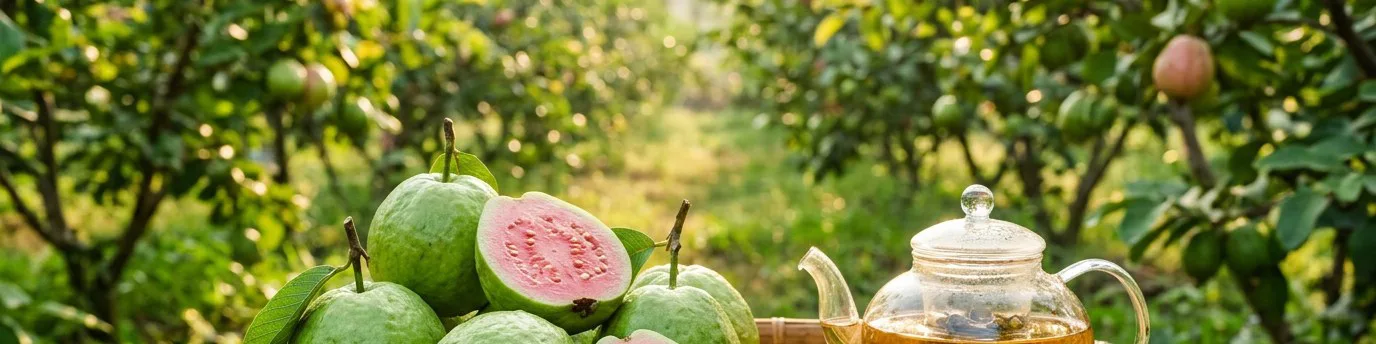
Celebrated across Vietnamese fruit markets as the "Queen of Guavas," Queen guava (Oi Nu Hoang) stands out for its rounded globe shape accented by gentle longitudinal ribs running from stem to blossom end. Individual fruits average an impressive 350 to 400 grams, enclosing a remarkably tiny central seed core with very few seeds inside thick, extra-crispy, sweet, and fragrant white flesh. Because trees flower prolifically and set heavy clusters capable of yielding up to 80 metric tons per hectare under attentive management, modern supermarkets, clean-fruit boutiques, and export buyers actively contract commercial farms for steady year-round harvests despite premium retail prices.
Agronomic Ecosystem Value and Everyday Nutritional Appeal
Beyond strong commercial returns alongside seedless specialty cultivars, mastering Queen guava planting technology delivers proven ecological and dietary benefits for diversified orchards and health-conscious families:
- Natural Citrus Greening Protection: Collaborative field trials conducted by scientists at Vietnam's Southern Horticultural Research Institute (SOFRI) together with Japanese agricultural researchers demonstrated that interplanting guava trees within citrus groves naturally repels the Asian citrus psyllid vector responsible for devastating Huanglongbing (citrus greening) disease, enabling resilient, sustainable agro-ecosystems.
- Fresh Culinary and Wellness Value: Prized primarily for fresh table enjoyment and also crafted into artisanal jams, dried fruit snacks, pressed juices, and jellies, Queen guava supplies abundant vitamin C and soluble fiber with modest calories. Regular enjoyment supports smooth digestion, healthy weight management, radiant skin elasticity, cardiovascular function, and balanced post-meal blood glucose—echoing the wonderful culinary and wellness uses of guava documented across tropical nutrition studies alongside traditional botanical leaf and bark extracts used in folk hygiene care.
Soil Preparation, Orchard Spacing, and Nursery Transplanting
Establishing a long-lived, productive Queen guava block begins with site-adapted soil preparation and certified nursery propagation:
- Raised Beds vs. Upland Planting Pits: On low-lying alluvial ground prone to seasonal waterlogging, build raised beds or individual planting mounds 20 to 30 centimeters high and 60 to 80 centimeters wide to keep feeder roots well aerated, adding fresh topsoil or canal silt onto the mounds each year as the root zone expands. On well-drained upland terrain, dig planting pits measuring 40 by 40 by 40 centimeters. Apply a basal dressing of 0.5 to 1 kilogram of agricultural lime per pit, wait 1 week, and thoroughly incorporate 5 to 10 kilograms of well-rotted farmyard manure plus 300 to 500 grams of superphosphate before planting.
- Medium-Density Spacing and Intercropping: Because structured pruning maintains a compact canopy, growers can space Queen guava trees at 2 by 2.2 meters, utilizing the open inter-row alleys during the early establishment phase for short-term legume or vegetable intercrops.
- Certified Nursery Stock and Staking: Select vigorous, true-to-type saplings propagated by air-layering (marcotting), grafting, or rooted cuttings from registered mother blocks. Position each sapling upright in the center of the mound with the top of the nursery rootball flush with the surrounding soil surface. Drive a sturdy stake parallel to the stem and tie securely against wind rock, mulch the base with dry rice straw or hay to conserve moisture, provide temporary light shading if young transplants show midday wilt, and water evenly.
Multi-Year Fertilization, Pruning Calendar, and Fruit Bagging
Sustaining crisp flesh texture and consecutive heavy harvests over many years requires balanced nitrogen and potassium applications calibrated to Southern Vietnamese orchard conditions, building on proven guava orchard fertilization principles:
- Year 1 Nutrition: Divide annual feeding into 6 split applications, supplying 80 to 200 grams of NPK 16-16-8 plus 50 to 100 grams of potassium chloride (KCl) or potassium sulfate (K2SO4) per tree at each interval.
- Year 2 Nutrition: Apply fertilizer 4 times per year, broadcasting 300 to 500 grams of NPK 16-16-8 supplemented with 150 grams of urea and 80 to 250 grams of KCl or K2SO4 per tree during each application.
- Year 3 Onward Rejuvenation Feeding: Immediately after major harvests, pair canopy rejuvenation pruning and root-zone soil dressing with 200 grams of NPK 16-16-8, 100 grams of urea, 100 grams of KCl, and 10 to 20 kilograms of composted manure per tree. Orchards situated on acid-sulfate soils should additionally incorporate agricultural lime, phosphorus, and plant ash.
Two-Year Canopy Training and Protective Bagging
During Year 1, once young trees reach 3 to 4 months of age, clip overly vigorous upright water sprouts and remove low branches trailing near the soil. Pinch lateral shoots back to 3 to 4 leaf pairs—or retain one leaf pair above emerging flower buds—allowing the orchard to yield its first light harvest around 7 months after planting. In Year 2, roughly 2 to 3 months after completing the main harvest, head branches back to a height of 1 meter, hoe the topsoil 5 centimeters deep beneath the canopy drip line, and apply recovery top-dressing. One month later, thin the resulting flush to retain healthy, evenly spaced shoots while removing weak sprouts, pinching lateral fruiting shoots two leaf pairs past each flower cluster.
When young Queen guavas reach 3 to 3.5 centimeters in diameter, complete preventive orchard pest protection and enclose each fruit in a clean white polyethylene bag: snip beveled drainage slits at the bottom corners so rainwater escapes freely, and punch a few 2 to 3 millimeter ventilation pinholes near the top to prevent trapped condensation. Proper bagging prevents sunburn and blocks Oriental fruit fly damage, delivering blemish-free harvests suited for every everyday nutritional and household usage of guava. Explore additional commercial orchard guides in our orchard cultivation techniques archive.