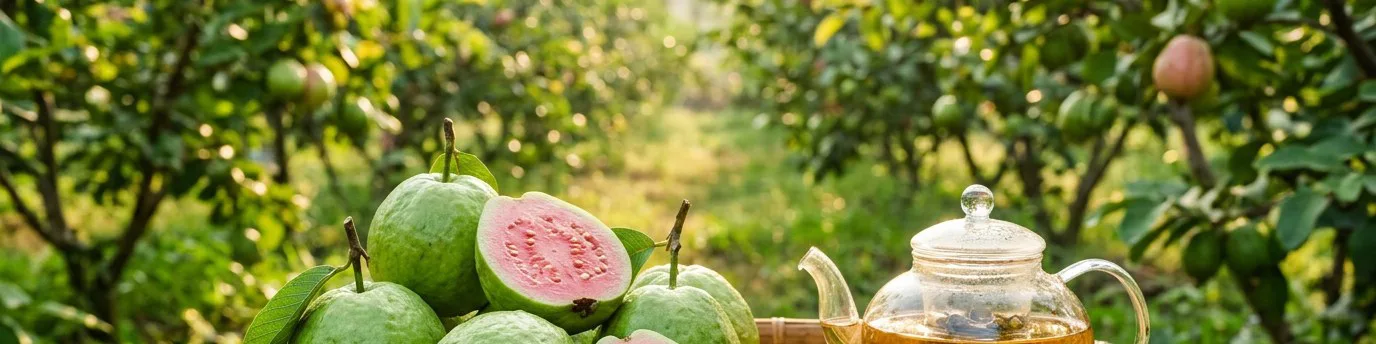
Classified as a hardy perennial woody fruit tree of the tropics, guava thrives across remarkably diverse soil types and has anchored rural homesteads throughout Vietnam for generations. Centuries of farmer selection have yielded beloved local cultivars—including smooth Mo guava, large Trau guava, petite aromatic Se guava, and heirloom Bo guava—alongside dwarf ornamental Chinese guavas shaped into compact container bonsai prized for their fragrant white blossoms and prolific fruiting. Because the species fits seamlessly into closed homestead ecosystems and tolerates challenging weather with minimal intervention, mastering guava propagation and planting gives both backyard gardeners and commercial growers a dependable harvest foundation.
Seed Propagation: Selecting, Drying, and Sowing Guava Seeds
Orchardists propagate guava cleanly through two primary pathways: natural generative reproduction from seed and vegetative cloning. For long-lived rootstocks or traditional homestead trees, growers harvest seeds exclusively from naturally tree-ripened fruit borne on vigorous, sun-drenched mother trees aged between 5 and 15 years. Select large, symmetrical fruits, scoop out the seed core, rub away the slick mucilage coating in clean water, and dry the seeds gently under mild morning sunshine until crisp. Sealed inside an airtight, moisture-free jar stored in a cool cupboard, properly sun-dried guava seeds retain germination rates of up to 90 percent even after 1 to 2 years.
Sow sun-dried seeds between early spring and midsummer. Once young seedlings reach 15 to 20 cm tall, transplant them into a fertile, consistently moist nursery bed for 1 to 2 months of root development before setting them into permanent orchard holes. Space permanent trees at least 4 meters apart—ideally 4.5 to 5 meters on center—so mature crowns never crowd or compete for sunlight, a layout principle shared with modern high-yield Voi guava orchard systems. Seed-grown trees enter full bearing within 3 to 4 years and anchor themselves with deep taproots capable of sustaining productive lifespans measured in decades—and occasionally over a century.
Vegetative Cloning: Rainy-Season Air-Layering Wisdom
When cultivar uniformity and early harvests take priority, growers rely on vegetative air-layering during the warm, humid rainy season when sap circulation peaks—an approach widely applied in commercial Queen guava planting as well as heirloom Bo guava orchards across Thai Binh Province. Follow these time-tested field steps:
- Choose sunlit southeast branches: Experienced Thai Binh growers select healthy semi-hardwood branches—stems whose bark is just turning from green to light brown without becoming overly old or rough—positioned on the southeast side of productive mother trees where morning sunlight thickens sap reserves and accelerates rooting.
- Ring-bark and scrape the cambium cleanly: Girdle a neat ring of bark and gently scrape away the slippery cambium tissue beneath so the bark cannot bridge prematurely; allow the exposed ring to air-dry for 3 to 5 days until initial callus tissue forms before wrapping with moist rooting medium.
- Harvest at mature secondary rooting: After 3 to 4 months, when fine creamy-white secondary roots weave visibly like spider silk around the outer wrap of the rooting ball, sever the branch cleanly below the wrap for potting or field transplanting.
Balancing Rapid Early Yields Against Orchard Longevity
Air-layered saplings (or hormone-stimulated stem cuttings) reward growers with rapid, true-to-type harvests that bring fresh guava's everyday nutritional rewards to market years sooner than seedlings. However, because cloned branches inherit the physiological age of the donor limb and form fibrous lateral roots rather than a deep taproot, air-layered trees exhaust themselves earlier than seed-grown trees, making periodic orchard renewal good practice. Visit our guava orchard cultivation archive for complete pruning, fertilization, and fruit-care guides.