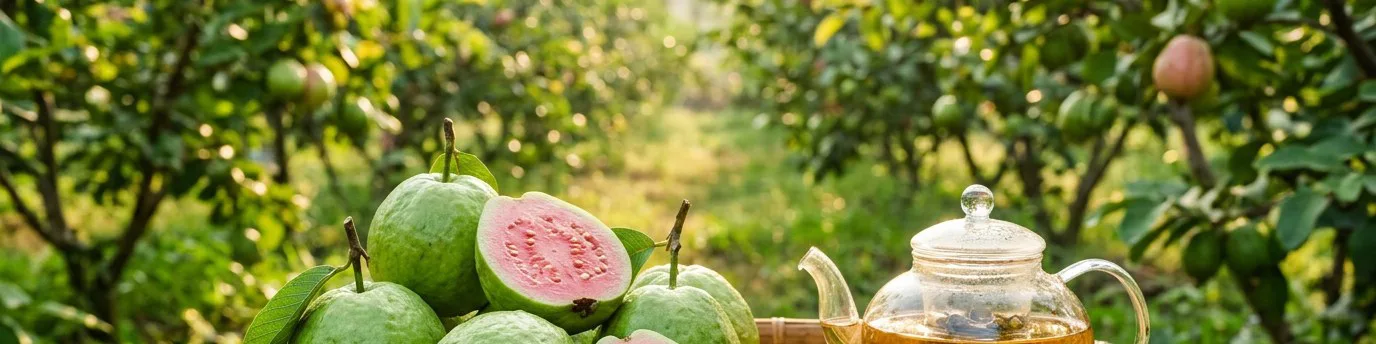
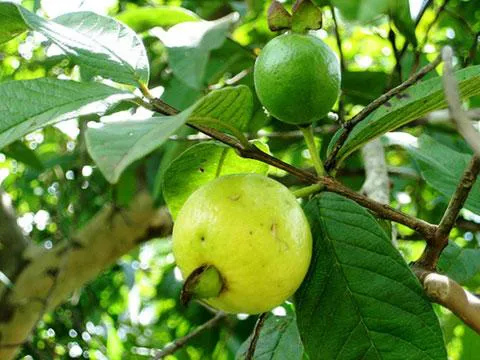
Known botanically as Psidium guajava L. within the Myrtaceae or myrtle family, the tropical guava tree has long occupied a central place in Vietnamese home gardens and everyday wellness traditions. Understanding guava leaf and fruit nutrition begins with recognizing the plant itself: a hardy, compact evergreen tree growing between 3 and 6 meters tall, easily identified by its four-angled young twigs with distinct square edges. Its oval leaves emerge in symmetrical opposite pairs along short petioles, displaying a finely velvety, pubescent underside, while delicate white blossoms open singly or in small clusters from the upper leaf axils before developing into thick-rinded aromatic fruit.
Vitamin C Density, Flavonoids, and Natural Tannins
From a dietary perspective, fresh guava delivers a remarkable spectrum of vitamins A and C, essential omega-3 and omega-6 fatty acids, and soluble as well as insoluble fiber while remaining naturally low in calories. Among tropical fruits and garden produce, guava ranks at the top for ascorbic acid density: certain cultivars contain up to 486 mg of vitamin C per 100 g of edible fruit. Nutritional analyses consistently show that vitamin C reaches its highest concentration in the firm outer flesh immediately beneath the rind, becoming progressively richer the closer you get to the skin. Even ornamental-fruiting cultivars such as the Malaysian purple guava trending in Hanoi pair vibrant anthocyanin pigments with this classic myrtle-family nutrient density.
Beyond vitamins, guava supplies two major classes of protective dietary antioxidants—carotenoids and polyphenols—alongside significant levels of quercetin, a bioavailable flavonoid studied for supporting cellular antioxidant protection, soothing everyday tissue irritation, and promoting seasonal respiratory comfort. Unripe green guavas and young foliage owe their characteristic tart, mouth-puckering astringency to concentrated tannins. In traditional Eastern herbal wellness, guava fruit and foliage are classified as neutral to mildly cooling, combining sweet, tart, and gently astringent notes that help tone mucosal surfaces, calm excess secretion, and soothe sensitive skin or digestive membranes.
Traditional Vietnamese Botanical Infusions and Topical Care
Across rural Vietnam, households have passed down practical ways of steeping young leaves and tender shoot tips—known locally as guava buds—as gentle botanical washes, mouth rinses, and warm herbal teas. While culinary enthusiasts often turn ripe fruit into refreshing Vietnamese guava dishes or incorporate crisp wedges into balanced guava meal plans for healthy weight management, folk herbalists prepare the astringent buds and leaves in five classic household applications:
- Topical care for minor skin scrapes and insect bites: Rural gardeners traditionally wash fresh, tender guava shoot tips and crush them into a clean herbal poultice for brief external application on minor outdoor insect bites or superficial skin irritation.
- Warm herbal soak for weathered skin on arms and legs: Simmering approximately 100 g of tender guava buds and young leaves in clean water yields a concentrated, tannin-rich decoction; once cooled to a comfortable warm temperature, it is used as a soothing topical wash two to three times daily.
- Gentle botanical mouth and gum rinses: Traditional oral care relies on three simple household methods—lightly chewing washed young shoot tips to massage sensitive gums; crushing about 7 tender guava buds with a splash of warm boiled water and a pinch of sea salt to dab gently along the gumline with clean cotton; or simmering 100 g of young leaves into a warm herbal mouthwash held for a few minutes before rinsing clean.
- Soothing dried leaf tea for seasonal throat comfort: Steeping 20 g to 40 g of sun-dried young guava leaves in hot water produces a fragrant, amber herbal infusion enjoyed warm to comfort a dry throat during chilly weather.
- Roasted herbal infusion for occasional loose digestion: A time-honored Vietnamese household decoction simmers 20 g of tender guava buds, 20 g of dried mangosteen rind, 10 g of charred fresh ginger, and 20 g of toasted white rice into a warm, calming digestive tea.
Mindful Consumption and Tannin Precautions
Because astringent tannins naturally slow intestinal motility, unripe green guava and concentrated leaf infusions are best avoided by anyone experiencing sluggish digestion or constipation.
Enjoying ripe, washed guava in moderation allows you to capture its full fiber and antioxidant profile comfortably. Readers exploring everyday plant-based routines can browse our guava nutrition and herbal leaf care archive for additional culinary and botanical preparation guides.