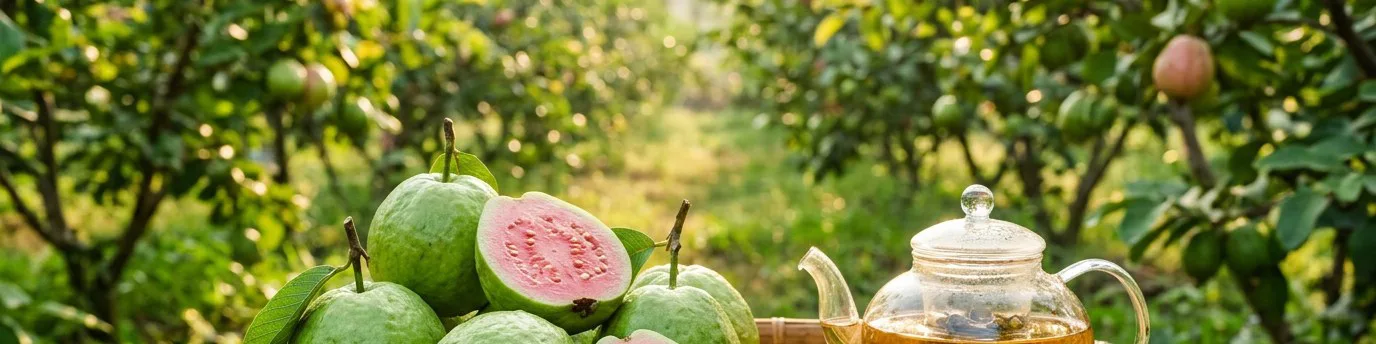
Maintaining productive tropical fruit orchards requires attentive canopy observation and timely seasonal maintenance, particularly during prolonged dry months when sap-sucking insects multiply rapidly. Combining integrated guava tree pest control with balanced irrigation, organic root-zone mulching, and post-harvest structural pruning keeps trees vigorous year after year while safeguarding clean harvests whose culinary and nutritional uses of fresh guava consumers trust.
Identifying and Managing White Waxy Mealybugs in Guava Orchards
Chalky scale insects and mealybugs (rệp sáp phấn) share a distinctive biological defense: their soft bodies secrete a powdery or waxy white protective coating that forms crusty clusters of varying shapes and sizes across sheltered plant surfaces. Colonies settle along tender leaf undersides, young shoots, fruit stalks (peduncles), and developing guavas to pierce tissues and extract plant sap. When infestations intensify—most commonly during hot, dry-season weather—leaves turn chlorotic yellow and drop prematurely, slender twigs wither and die back, and young fruits become stunted, discolored, or drop before maturity. Dense mealybug populations also excrete sticky honeydew that coats foliage and fruit skins, encouraging unsightly black sooty mold fungi that block photosynthesis and lower market value.
Under balanced orchard conditions, beneficial natural predators such as ladybird beetles, lacewings, and parasitic wasps keep light mealybug populations below economic thresholds without chemical intervention. Growers should apply targeted plant-protection sprays only when orchard monitoring confirms high pest density: specifically when 5 to 10 percent of fruits or shoots are infested (averaging roughly five or more mealybugs per fruit or leaf) across at least 5 percent of trees in the orchard. When intervention is warranted, agricultural extension guides recommend targeted treatments such as horticultural mineral oil (DC-Tron Plus 98.8EC) or registered orchard formulations including Supracid 40EC/ND, Bi-58, Suprathion 40EC, or Xi-men 2SC, sprayed directly onto waxy colonies strictly according to label concentrations.
For low-residue physical control, orchardists can also use high-pressure water pumps fitted with focused spray nozzles to blast dense mealybug clusters off branches and fruit stalks, dramatically reducing pest numbers without synthetic residues. Whenever protective sprays are applied to bearing trees—including high-value cultivars such as crispy seedless Phugi guava trees—growers must strictly observe the pre-harvest quarantine interval printed on the product label to ensure complete food safety for consumers.
Dry-Season Irrigation, Root Mulching, and Post-Harvest Pruning
Strong cultural care reinforces natural pest resilience, complements balanced seasonal guava fertilization schedules, and prepares trees for abundant flowering waves across our orchard cultivation techniques archive:
- Balanced Dry-Season Irrigation: Water orchard rows consistently during dry weather—typically once every two to three days—while avoiding sudden overwatering when marble-sized young fruits are setting, since excess moisture fluctuations can trigger physiological fruit drop.
- Basal Top-Dressing and Straw Mulching (Bồi đất và tủ gốc): During the dry season, top-dress the tree basin with a 1 to 2 centimeter layer of dried pond silt or fertile loam, paired with well-composted farmyard manure and a breathable mulch of dry rice straw or hay to conserve root moisture and feed surface feeder roots.
- Flowering Regulation and Post-Harvest Canopy Renewal: Adjust routine pruning intensity to match tree age, soil vigor, and target harvest season. Immediately after picking a main crop, prune out diseased, dead, shaded, or spindly toothpick-thin twigs, and head back upright main leaders to a height of roughly 1 meter so sunlight penetrates the center and stimulates sturdy new fruiting shoots.