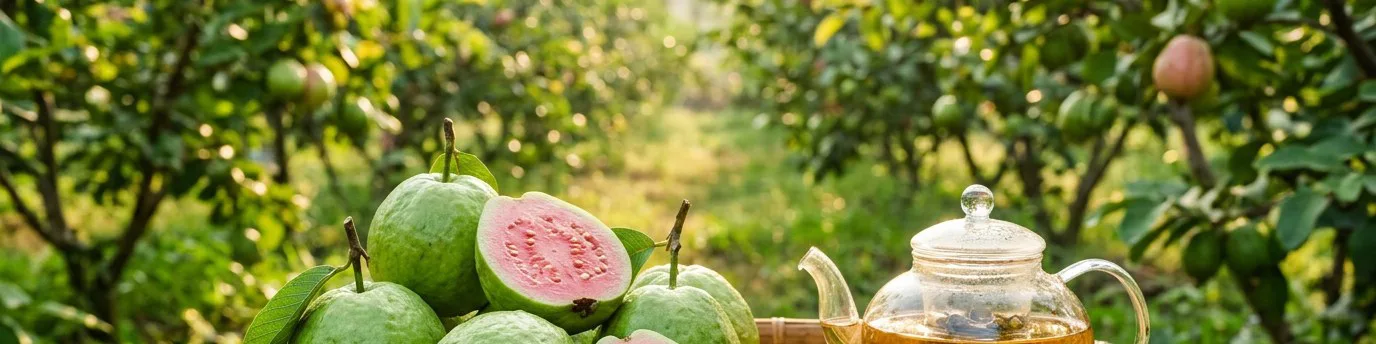
Harvested at peak seasonal maturity, locally grown Vietnamese guava offers traceable orchard freshness alongside remarkable micronutrient density for whole-body vitality and glowing skin. As the largest organ of the human body, the skin acts as a visible mirror of internal nutritional balance, hydration, and microcirculation. Everyday concerns such as flakiness, excess sebum, blemishes, blotchy redness, sensitivity, and premature age lines often signal cumulative oxidative stress, sluggish circulation, and subtle dietary vitamin gaps. Prioritizing seasonal guava vitamin nutrition in daily meals supplies a synergistic spectrum of water-soluble vitamins and protective carotenoids, especially when fruits are grown cleanly using protective orchard fruit-bagging techniques for clean guava.
Vitamin C and Vitamin K for Structural Collagen and Calm Tone
Fresh crisp guava ranks among the richest botanical sources of vitamin C in the tropical orchard, reaching up to 600 mg per 100 grams (0.6 grams) in select peak-season cultivars. Allowing the fruit to soften past peak crispness can lower ascorbic acid by 50 to 100 mg, while heat-processed canned guava loses roughly 50 percent of its original vitamin C content. Adequate dietary vitamin C enhances intestinal absorption of essential minerals such as iron and calcium, accelerates everyday skin barrier recovery, and drives collagen synthesis to maintain firm, elastic dermal tissue against tissue-damaging free radicals. Conversely, chronic vitamin C shortfall leaves skin rough and dry while contributing to gum tenderness, joint stiffness, easy bruising, and sluggish tissue repair.
Complementing this collagen support, a 100-gram serving of fresh guava provides approximately 1.4 mcg of vitamin K, representing roughly 2 percent of the 80 mcg daily adult reference intake. Vitamin K supports healthy capillary coagulation and microcirculation, helping calm visible skin redness, uneven pigmentation, dark under-eye circles, and blemish-related irritation. Readers curious about how this tropical superfruit adapted to Southeast Asian soils can explore the botanical origins and global journey of guava.
Lycopene Carotenoids and Essential B-Complex Coenzymes
Beyond vitamins C and K, pink and red guava varieties supply approximately 2.9 mg of lycopene per 100 grams of edible fruit. This bioavailable carotenoid antioxidant shields healthy cell membranes and cellular DNA from metabolic byproducts and urban environmental pollutants that accelerate premature photoaging and uneven texture. Paired with traditional orchard stewardship, families also value household herbal preparations from backyard guava trees for complementary topical and digestive care.
- Niacin (Vitamin B3): Fresh guava delivers 0.6 to 1.068 mg of niacin per 100 grams, functioning as a vital metabolic coenzyme that converts dietary carbohydrates and fats into steady cellular energy while supporting smooth digestion, healthy appetite, calm nerve signaling, and supple skin hydration.
- Thiamine (Vitamin B1): While thiamine occurs most abundantly in whole grains, legumes, liver, and lean meats, nutritional analyses from Purdue University in the United States show that 100 grams of guava contributes 0.046 mg of vitamin B1 to assist cellular energy synthesis and guard against muscle fatigue, fluid retention, and nerve sluggishness.
- Riboflavin (Vitamin B2): Providing 0.03 to 0.04 mg of riboflavin per 100 grams, fresh guava nourishes delicate mucosal and dermal tissues around the lips, nose, mouth corners, and eyes to guard against seasonal chapping and light sensitivity.
Enjoying fresh, unpeeled orchard guava two to three times a week preserves heat-sensitive B vitamins and ascorbic acid at full potency without added sugars. Browse more seasonal nutrition guides in our tropical guava nutrition and wellness archive to pair fresh fruit with balanced daily meals.