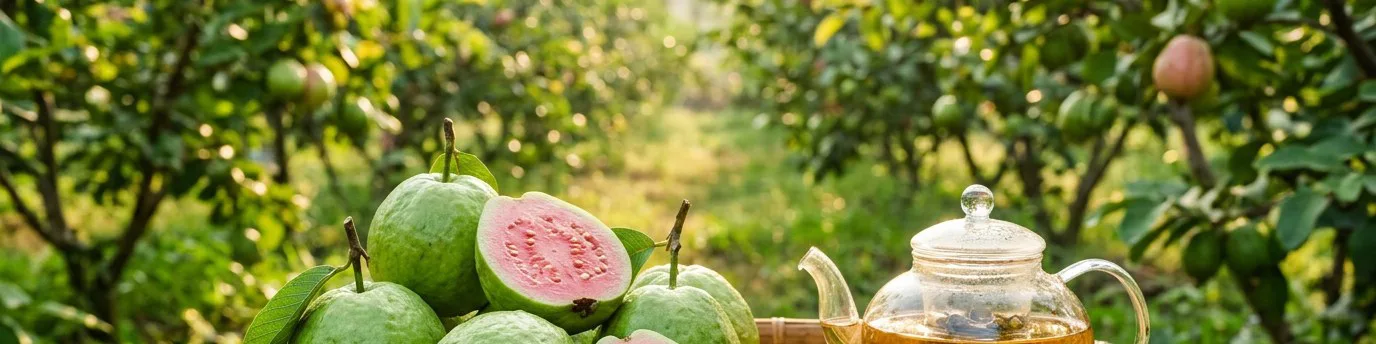
Across rural homesteads and commercial river-delta orchards in Vietnam, guava is treasured both as an aromatic table fruit and as a cornerstone of guava leaf botanical wellness. From crisp green-skinned slices enjoyed fresh after harvest to warm herbal infusions steeped from tender leaf buds, nearly every part of the guava tree offers practical nutritional and household value.
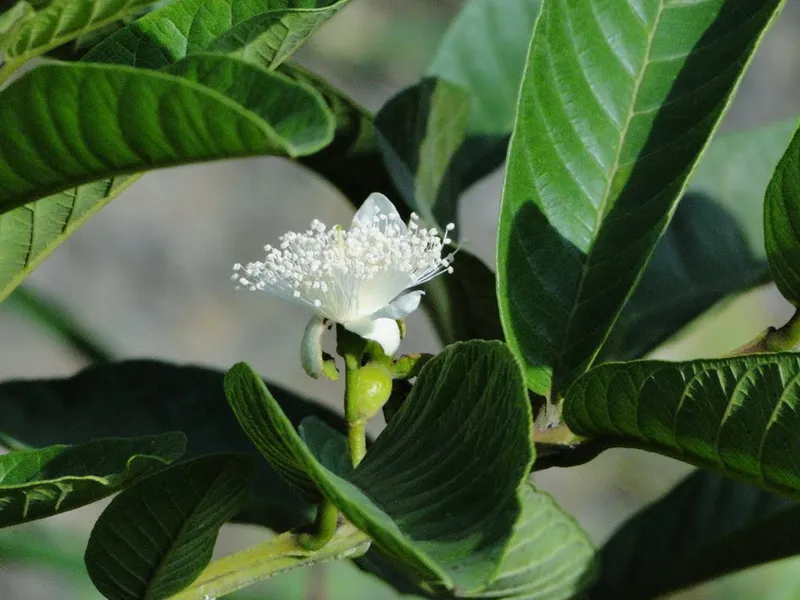
Heritage Vietnamese Guava Cultivars and FAO Nutritional Profile
Guava trees adapt readily to diverse tropical soils and can be propagated through seed sowing, branch grafting, air-layering, root cuttings, or semi-hardwood stem cuttings. Readers curious about how these varieties spread across Southeast Asia can explore the botanical origins and heritage cultivars of Vietnamese guava. Within Vietnam, regional growers cultivate several celebrated varieties prized for their distinct crunch and fragrance, including heirloom Bo guava from Thai Binh province, Cho Con guava from Nam Dinh, crisp Xa Li pear guava, and sweet ruby red-fleshed guava grown extensively across Tien Giang and Dong Thap in the Mekong Delta.
Well-ripened Vietnamese guava delivers a distinctive tropical bouquet—pleasantly floral, balanced between brisk acidity and mellow sweetness, and every bit as rewarding on the table as temperate pears, orchard apples, or ripe mangoes. According to Food and Agriculture Organization (FAO, 1976) food composition tables, every 100 grams of edible fresh guava pulp provides a remarkably balanced nutrient profile:
- Moisture and macronutrients: 80.6 g water, 17.3 g carbohydrates (glucids), 1.0 g protein, 0.4 g lipids, and 0.7 g total mineral ash.
- Essential trace minerals: 15 mg calcium (Ca), 24 mg phosphorus (P), and 0.7 mg iron (Fe) to support bone density and oxygen transport.
- Vitamins and antioxidants: 75 micrograms vitamin A, 0.05 mg vitamin B1 (thiamine), and an impressive 132 mg vitamin C.
Phytochemical Compounds in Guava Fruit, Bark, and Foliage
In traditional Eastern herbalism, unripe green guava carries a brisk, tart-astringent flavor and a neutral thermal nature that aligns with the Spleen and Large Intestine meridians. Because its natural tannins gently consolidate fluids and tone mucosal tissues, green guava has long been used in folk dietary care during episodes of loose stools or seasonal gastrointestinal sensitivity. Conversely, fully ripe guava offers a sweet, mildly warming, and tonifying character that harmonizes Spleen function and supports smooth digestion—making peeled ripe fruit a popular dietary choice for easing sluggish bowel habits, mild indigestion, gum sensitivity, and everyday meal planning alongside traditional guava fruit and leaf infusions for glycemic balance.
Modern phytochemical analysis confirms why foliage and bark play such an active role in guava leaf botanical wellness. Mature guava leaves contain fragrant essential oils—including alpha-limonene—alongside beta-sitosterol, maslinic acid, and guajavolic acid. Tender young guava leaves and unopened leaf buds also supply 7 to 10 percent pyrogallic tannins and roughly 3 percent natural plant resin, with essential oil glands occurring in much higher concentrations in the leaves than in the seeds, while the trunk bark is rich in ellagic acid. These concentrated leaf tannins gently tone the intestinal lining, moderate excess gut fluid secretion, calm hyperactive bowel motility, and provide mild natural antimicrobial cleansing.
Traditional Guava Leaf Botanical Wellness Infusions and Topical Washes
In Vietnamese village herbal practice, households prepare measured decoctions and external washes from fresh buds, leaves, and bark for everyday comfort, complementing the five unexpected household and wellness uses of guava documented across folk traditions:
- Warming digestive infusion after cold exposure: Combine 12 to 20 g of rapidly dried young guava buds or tender leaves with 10 g of charred fresh ginger (or 10 to 12 g of dried galangal rhizome) and 10 to 12 g of dried tangerine peel. Simmer gently in 500 ml of water until reduced to 200 ml, then divide into two warm servings taken before meals.
- Cooling digestive decoction during warm weather: Lightly toast 12 to 20 g of young guava buds, tender leaves, or guava stem bark until fragrant, then simmer in 500 ml of water with 20 g of dried cassava root slices and either 12 g of fresh green tea leaves or 12 g of broadleaf plantain herb until reduced to 200 ml. A small pinch of raw cane sugar may be added for palatability if desired.
- Roasted brown rice and guava leaf tea for acute stomach upset: Finely chop 30 g of tender young guava leaves and dry-roast them in a skillet with a handful of rice—whole brown rice is especially nourishing—then simmer with 500 ml of water down to 200 ml, strain the warm liquid, and sip in two portions on an empty stomach.
- Soothing external wash for localized skin irritation: Wash 100 g of fresh young guava buds thoroughly, crush them in a clean ceramic mortar with 10 g of potassium alum and 1 g of sea salt, stir in a small splash of cooled boiled water, and dab the strained liquid gently onto irritated skin while seeking clinical guidance for persistent viral rashes such as shingles.
- Saline-washed herbal poultice for minor scrapes and bruises: Rinse fresh guava leaves thoroughly in mild salt water, pound into a clean paste, and apply topically to minor surface abrasions or small bruises.
For additional guides on vitamin-rich fruit selection, herbal tea steeping, and everyday dietary care, browse our complete guava nutrition and herbal leaf care archive.